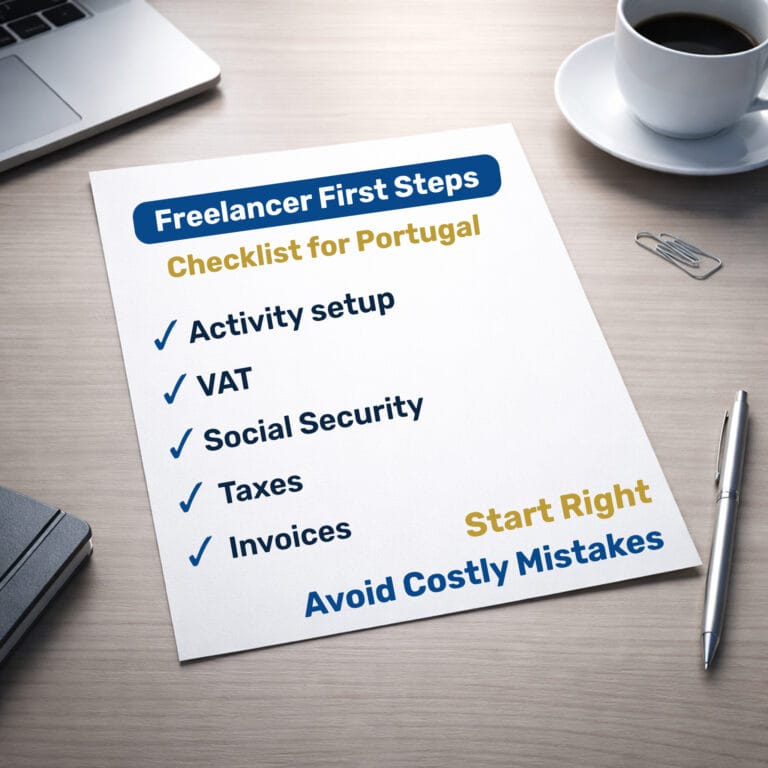
Most small businesses keep accounts, but don’t use them effectively to manage cash flow, reduce avoidable tax, or prevent surprises (and often aren’t getting the right support from their accountant).
Below are the most common issues we see in Portugal alongside what to do instead.
1) Treating accounting as “something to do for the tax office”
If the only time you look at numbers is when a tax payment arrives, you are managing the business blind.
What this causes
- Paying too much tax because nothing is planned
- Not having enough cash flow to pay obligations (VAT, IRS/IRC, Social Security)
- No clarity on whether the business is actually profitable
What to do instead
- Review results monthly (even a simple one-page summary)
- Track: revenue, gross margin, recurring costs, tax provisions, and cash balance
- Make tax planning a routine — not a crisis response
2) Not separating business and personal spending
This is one of the fastest ways to lose control of your numbers and create liability issues over time.
What this causes
- Difficult expense classification
- Poor documentation
- Unreliable profitability
- Higher risk of disallowed costs in case of audit
What to do instead
- Use a dedicated business bank account and card
- Pay yourself intentionally (salary/withdrawal/distribution depending on structure)
- If you must mix, document and label transactions immediately
3) Missing invoices and weak supporting documents
In Portugal, an expense having happened is not enough. All deductible expenses need to be properly supported with their correctly issued invoices.
What this causes
- Costs not accepted as deductible
- VAT not recoverable when it could have been
- Time-consuming back-and-forth of client and accountant at year-end
What to do instead
- Be aware that with no document there is no deduction
- Store invoices properly, preferably in digital format
- Request proper invoices with correct NIF and descriptions
4) VAT mistakes that quietly become expensive
VAT issues often don’t feel urgent until the payment is due or until a mistake is discovered.
Common examples:
- charging VAT late (or not charging when required)
- incorrect VAT rates
- treating VAT-collected money as “revenue”
- forgetting reverse charge rules on some services
What this causes
- Unexpected VAT bills
- Penalties and interest
- Cash flow issues
What to do instead
- Treat VAT as “money held for the State” — it should not be treated as income
- Track VAT due monthly even if you report quarterly
- If you buy services from abroad, confirm whether reverse charge applies
5) Paying yourself in an inefficient way
Owners often extract money from the business without a real plan. That can create unnecessary tax or Social Security costs.
What this causes
- Paying more tax than necessary
- Unnecessary Social Security contributions on inefficient salary levels
- Cash flow shocks after unplanned withdrawals
- Risk of income being reclassified (salary vs dividends), triggering additional tax and Social Security
What to do instead
- Define upfront the split between salary and withdrawals
- Review annually the most tax-efficient structure for your situation
- If you are a company director, treat compensation planning as a core decision
6) Using the wrong structure for too long
Many businesses grow past the point where their current setup is efficient.
Examples:
- staying as a freelancer when profits justify incorporation
- remaining in the simplified regime even though real expenses would reduce tax under organized accounting
- not adapting the structure once employees or subcontractors become part of the business
What this causes
- Paying more tax than necessary
- Lack of liability protection as the business grows
- Inefficient business expense treatment
- Weaker credibility for banks or investors
What to do instead
- Review structure when revenue or costs change materially
7) Ignoring Social Security
Social Security contributions in Portugal are mandatory and can take a huge chunk of your income. But many small businesses fail to forecast them properly.
What this causes
- Underestimating total tax and contribution costs
- Cash flow pressure from unplanned payments
- Surprises when contributions change
What to do instead
- Treat Social Security like a monthly cost that must be forecast and provisioned
- Regularly review your expected contributions as income rises
8) Not budgeting for taxes throughout the year
If you only calculate tax when the return is filed, you may not have enough cashflow to pay your taxes on time.
Surprises can also occur once the tax authority starts requesting advance tax payments during the year.
What this causes
- Lump-sum payments that damage cash flow
- Poor pricing decisions due to ignoring the taxes
- Unnecessary stress and financial preasure
What to do instead
- Set aside a percentage of revenue monthly into a “tax account”
- Estimate your effective tax rate with your accountant and adjust as needed
- Review mid-year to adjust pricing, costs, or provisions in time
9) Pricing without understanding net income
A business can look profitable and still be under-pricing when taxes and real costs are considered.
What this causes
- High revenue but low net income after all obligations are paid
- High work volume with low profit
- Limited room for investment, hiring, or tax buffers
What to do instead
- Incorporate all costs (including tax) into your pricing decisions
- Know your approximate net outcome (after taxes and Social Security)
- Price to sustain the business, not to win every client
10) Leaving everything for the last minute
Rushed accounting is expensive accounting because time pressure creates errors.
What this causes
- Missed business expenses deductions
- Incorrect VAT reporting
- Late filings and penalties
- No time for planning or structure reviews
What to do instead
- Establish a simple monthly financial review routine with your accountant
- Ensure accounts, VAT, and tax positions are reviewed regularly—not just at deadlines
- Use this review to make decisions — not just to stay compliant
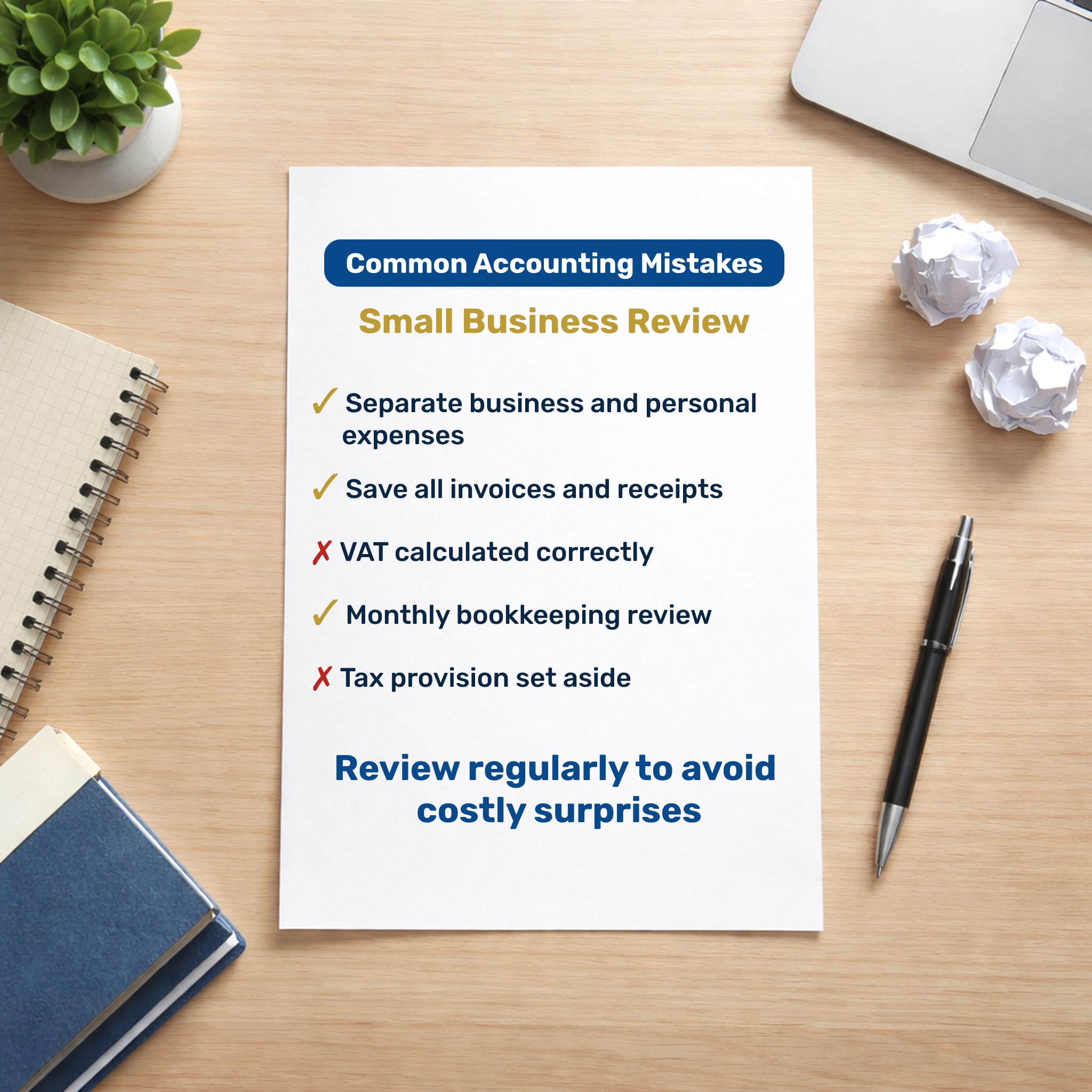
A Simple Checklist to Avoid 80% of These Problems
These five points help avoid most issues:
- Separate business from personal spending
- Save every invoice with correct details
- Track VAT obligations and treat it as “not yours”
- Set aside money monthly for taxes
- Review numbers monthly
Final Thought
Good accounting is not about compliance — compliance should be the minimum.
Good accounting is about keeping more of what you earn, avoiding preventable mistakes, and making decisions early enough for them to matter.