Moving to Portugal is often sold as a lifestyle upgrade. Tax is usually treated as an afterthought — until the first unexpected bill, penalty, or “why is this so high?” moment.
This article is about avoiding expensive mistakes, staying compliant, and legitimately keeping more of what you earn.
Mistake 1: Assuming Your Old Country “Stops Taxing You” Automatically
Many people move, start a life in Portugal, and assume their tax situation resets.
In practice, you can end up with:
- tax residency in Portugal and
- continuing tax obligations abroad (depending on your country, ties, and timing)
How to avoid it
- Know your Portugal tax residency start date (usually when you meet residency criteria, often linked to time spent and/or having a habitual home).
- If you’re leaving another country, confirm what they consider a “tax exit” and what proof they require.
- Keep a file of your move: flight dates, rental contract, utility bills, registration dates.
Double taxation is often avoidable, but only if residency and reporting are handled cleanly and on time.
Mistake 2: Not Declaring Foreign Income
Portugal requires reporting of worldwide income for tax residents.
That doesn’t always mean you’ll pay tax twice — but you often still need to declare it.
Common examples:
- dividends and interest from foreign banks/brokers
- rental income abroad
- pensions
- freelance income billed to foreign clients
- capital gains from selling foreign shares
How to avoid it
- Keep annual statements from banks and brokers (Portugal reporting is documentation-driven)
- If you’re not sure whether something counts as Portuguese taxable income, assume it needs review before filing
Properly structured foreign income reporting can reduce risk and preserve access to treaty relief/credits.
Mistake 3: Choosing the Wrong “Box to Tick” for Freelance Work
Foreign residents often register activity and start issuing invoices, but they may:
- pick the wrong activity code
- choose the wrong tax regime without understanding the consequences
- forget VAT and Social Security triggers
How to avoid it
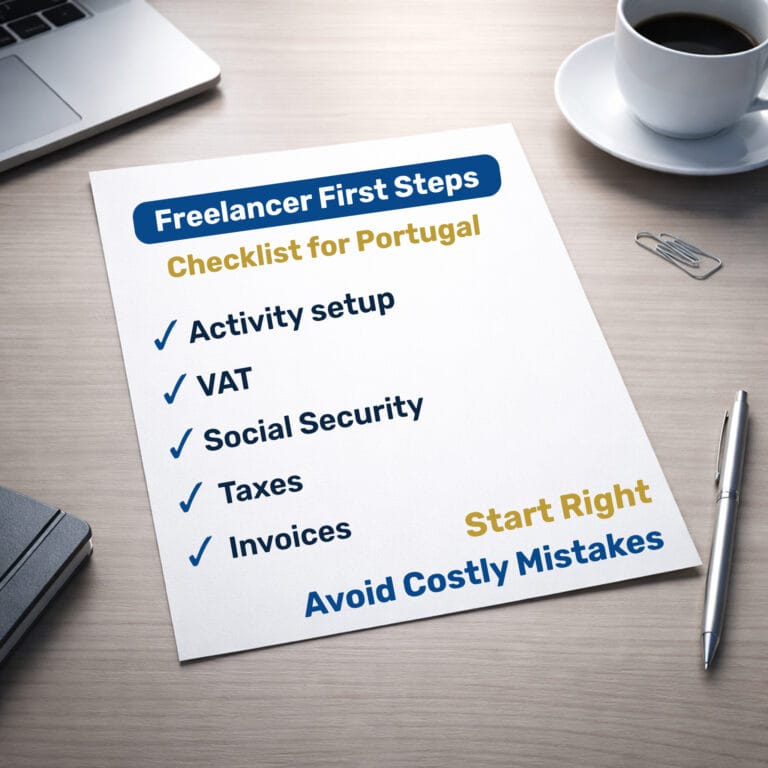
Before your first invoice, clarify:
- your activity classification
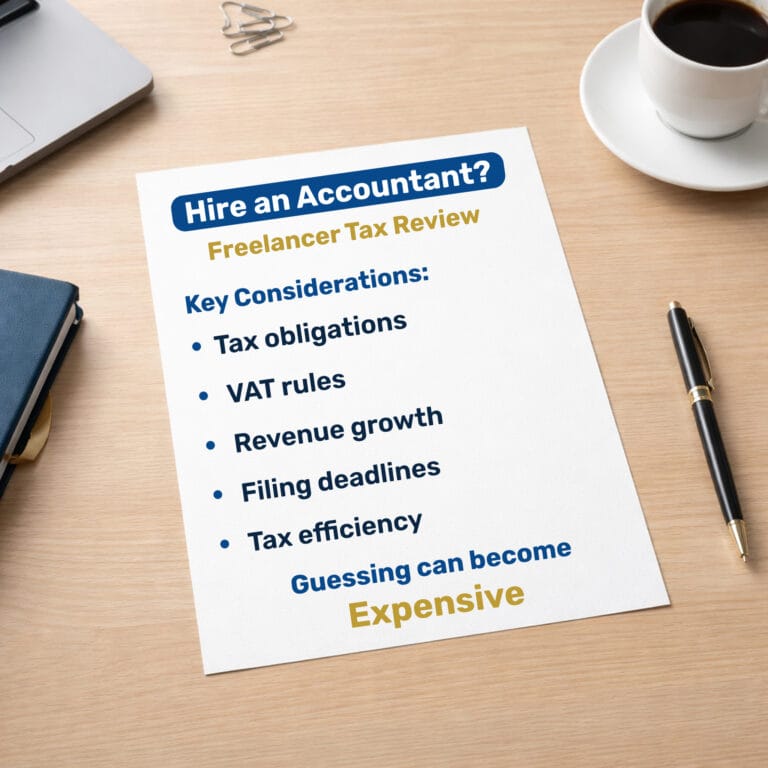
- whether you should use simplified or organized accounting
- whether VAT applies now, later, or not at all
- what Social Security contributions will look like
The first setup decisions often determine your tax outcome for the entire year.
Mistake 4: Assuming “Digital Nomad” Means “No Portuguese Tax”
Working remotely from Portugal for a foreign employer/client can still create Portuguese tax exposure if you are tax resident here.
How to avoid it
If you live in Portugal most of the year, plan for Portuguese taxation and structure accordingly.
The best time to plan is before income starts flowing, not after the year-end.
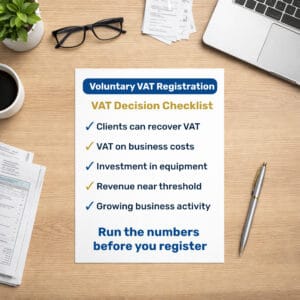
Mistake 5: Ignoring VAT Until It Becomes a Problem
VAT (IVA) is one of the most common “surprise” problems for foreign residents who freelance or run small businesses.
Two typical mistakes:
- charging VAT when you shouldn’t (pricing yourself out unnecessarily)
- not charging VAT when you should (then paying it out of your own pocket later)
How to avoid it
- Confirm whether your activity is VAT-exempt, outside scope, or subject to VAT
- Know your turnover thresholds and what triggers a change
- Review VAT position before you raise prices or scale
Mistake 6: Missing Deadlines
Portugal’s system is deadline-driven. Most penalties in Portugal are automatic and avoidable but once triggered, interest and fines accumulate immediately.
Common issues:
- late tax returns
- late VAT submissions (if registered)
- missing Social Security declarations
- paying tax after the deadline
How to avoid it
- know which tax calendar applies to you
- separate “submission date” from “payment date”
- track monthly vs quarterly obligations
- confirm that returns were actually submitted
- review your portal at least once per month
- plan cash flow before tax is due
Missed deadlines do not improve your tax position — they simply transfer money from your activity to interest and fines.
Mistake 7: Poor Documentation – Especially for Expenses
Foreign residents sometimes assume:
- a bank statement is enough
- an expense “counts” because it’s business-related
- receipts in another language/country will be accepted without clarity
Portugal is invoice-based. Documentation quality matters.
How to avoid it
- Keep invoices/receipts properly issued and stored
- Separate business and personal spending as much as possible
- Keep supplier invoices and proof of payment for cross-border expenses,
Good documentation increases deductible certainty and reduces audit risk.
Mistake 8: Treating “Tax Regime” as Permanent
People choose a regime once (simplified vs organized accounting, VAT status, etc.) and never review it.
But efficiency changes when:
- income rises
- your expense structure changes
- you hire subcontractors
- you start a second income stream (rentals, dividends, capital gains)
How to avoid it
Review your structure at least:
- mid-year (before it’s too late to adjust planning)
- year-end (to prepare the next year properly)
A Simple Checklist
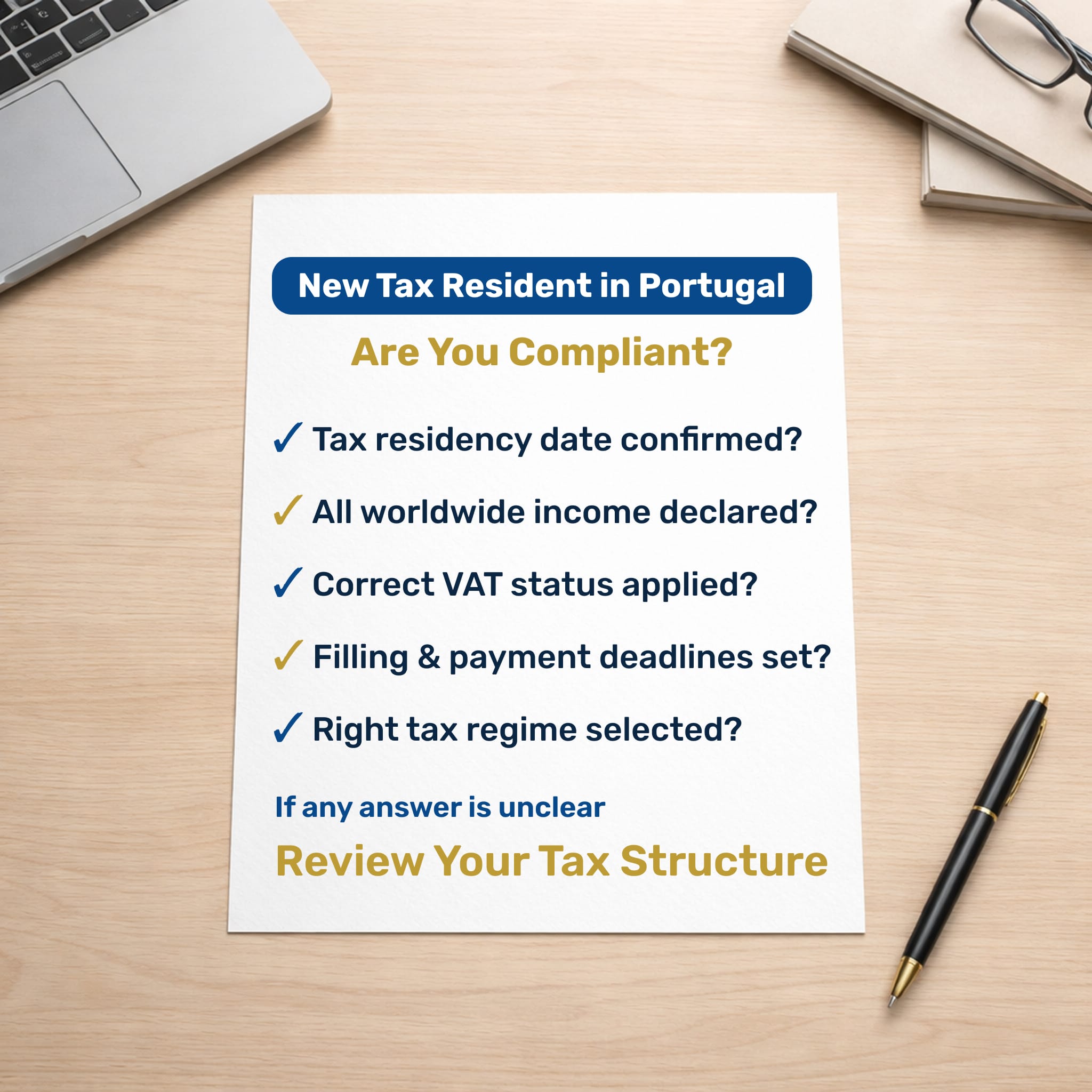
If you are a foreign resident in Portugal, make sure you can answer these clearly:
- Am I Portuguese tax resident this year? From what date?
- What income streams do I have worldwide (salary, freelance, dividends, rent, gains)?
- Are all of them being reported correctly in Portugal?
- If I freelance: what is my tax regime and VAT position?
- Do I know my main annual deadlines?
- Are my invoices/receipts clean and organized?
- Do I have a mid-year review scheduled?
If any of these are unclear, that’s usually where the cost comes from.
Final Thought
Most “tax problems” foreign residents face simply basic structure and reporting issues left unattended.
The goal is simple: stay compliant, avoid penalties, and keep your tax position efficient.