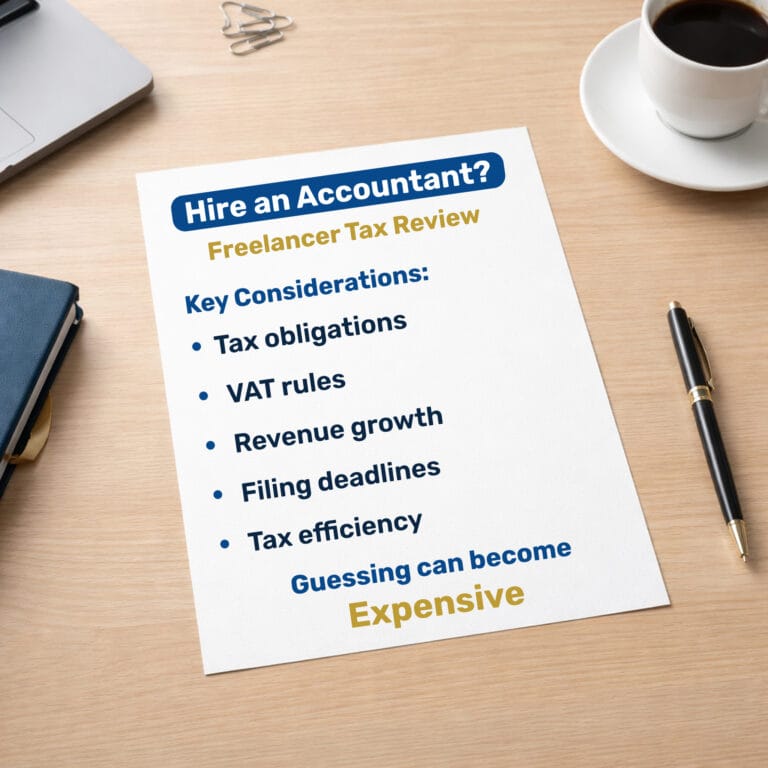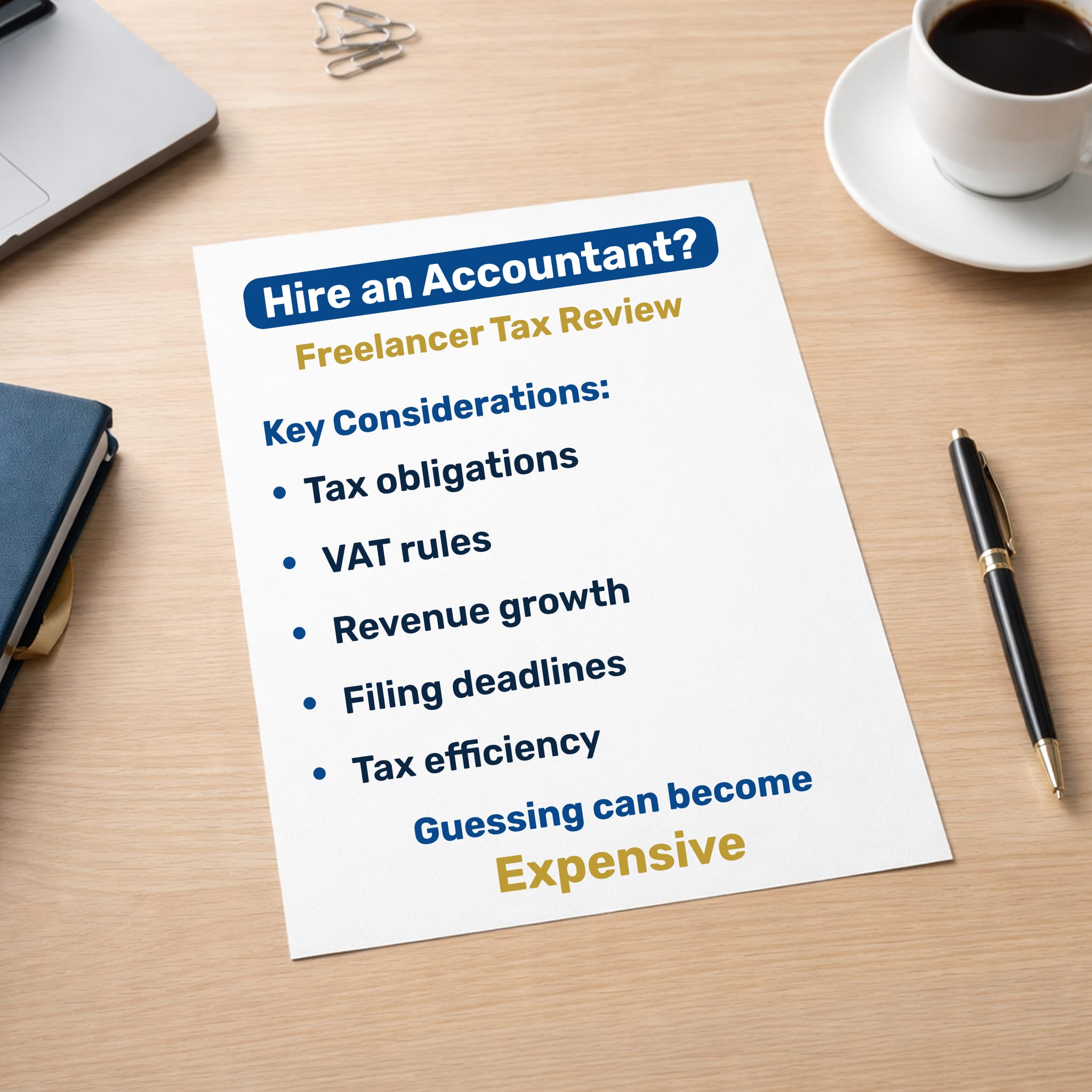
Not every freelancer in Portugal needs an accountant from day one. But many reach a point where trying to manage everything alone starts costing more in tax, mistakes, missed deadlines, or poor decisions than the accounting fee itself.
Do not decide based on whether you can do it yourself. Consider whether doing it yourself is still efficient.
You Can Start Without One
Many freelancers begin with a simple structure.
If your activity is straightforward, your revenue is still modest, and you are under the simplified regime, it is possible to manage the basics yourself.
In Portugal, organized accounting is generally mandatory only once annual income is above €200,000, and that regime requires a certified accountant by law.
Below that level, many independent workers remain under the simplified regime unless they choose otherwise.
So strictly speaking, even the legal answer is:
No, you do not need an accountant immediately.
Situations when there might be no need
A freelancer may not need ongoing accounting support if all of this is true:
- the activity is new and still very small
- invoicing is simple
- there are no foreign clients or unusual VAT issues
- expenses are limited
- there is no uncertainty about the basic obligations
- the person is willing to stay on top of deadlines and admin
In that case, a one-off consultation may be enough at the start.
That is often the most efficient option: not full ongoing support but getting the structure right early.
When Ongoing Accounting Support Starts to Make Sense
Ongoing support becomes more worthwhile when:
- the person wants a clearer view of what they can take from the business and what they should keep aside
- there are questions about VAT, withholding, or cross-border work
- income is now meaningful enough that tax mistakes are expensive
- the simplified regime may no longer be the best fit
- the freelancer wants regular and experienced oversight
- they want someone reviewing the position before deadlines become problems
An accountant can protect your net income and avoiding preventable problems.
This is where accounting starts adding value beyond just compliance.
When an Accountant Starts to Matter
1) You no Longer Know What to Set Aside
For many freelancers, the first real problem is cash flow.
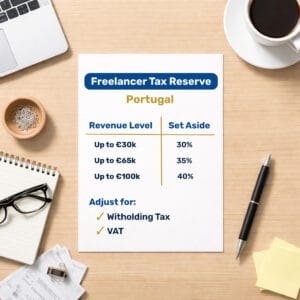
If you are earning regularly but do not know how much to reserve for IRS, Social Security, VAT, or withholding tax, the risk is simple: you may be using money that is not really yours to spend.
At that point, an accountant is not just “doing compliance.” They are helping you make your final tax outcome more predictable.
2) You Are Unsure Whether VAT Applies
VAT is one of the first areas where freelancers get caught.
This usually becomes relevant when:
- you are invoicing business clients
- you are working with clients outside Portugal
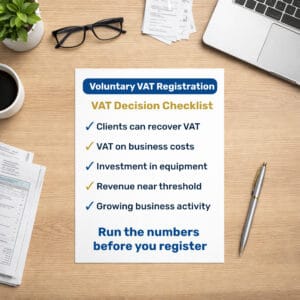
- you are close to a VAT threshold or considering voluntary registration
- you are not sure whether your invoices should include VAT at all
This is very relevant because any mistake may cost you big money.
3) Your Income Has Increased and the Old Setup Has Not Been Reviewed
A freelancer can often operate for quite a while on a simple setup.
But once revenue grows, that same setup may stop being efficient.
That is especially true if:
- your expenses have increased
- your work structure has changed
- you are subcontracting
- you are buying equipment
- you are starting to think like a business rather than a side activity
At that stage, an accountant becomes useful because the money you might be able to save may be materially higher than the accounting fees.
4) You Are Approaching Organized Accounting Territory
If annual income is moving toward the point where organized accounting may apply, you should not wait until the last minute to understand the implications.
Organized accounting (and hiring the services of a certified accountant) is required by law when a business annual income is above €200,000.
Even before that point, a review can be worthwhile because once your numbers become larger, small tax inefficiencies can become very expensive.
5) You Are Spending Too Much Time on Admin
There is a stage where managing the activity yourself becomes technically possible, but it no longer makes sense given the time it requires.
If too much time is going into:
- checking obligations
- fixing invoice errors
- understanding filing deadlines
- reading tax forums
- trying to work out what applies to your case
Then you have an opportunity cost problem.
If an accountant frees up billable hours and reduces the chance of avoidable mistakes, that is already an economic argument.
6) You Want to Avoid Paying Tax Blindly
Some freelancers assume an accountant is only useful once there is a problem.
But arguably the best time to involve an accountant is before:
- your first full tax year closes
- revenue increases sharply
- you change how you invoice
- you take on foreign clients
- you move from occasional work to stable self-employment
That is when planning helps which may save you tons of money.
After a problem occurs, an accountant’s job is usually just damage control.
Final Thought
A freelancer does not necessarily need an accountant from the first invoice.
But most people need one before they think they do.
Because once income grows, the cost of guessing grows with it.
If you are making tax decisions without being sure of the outcome, it is probably time to get support.