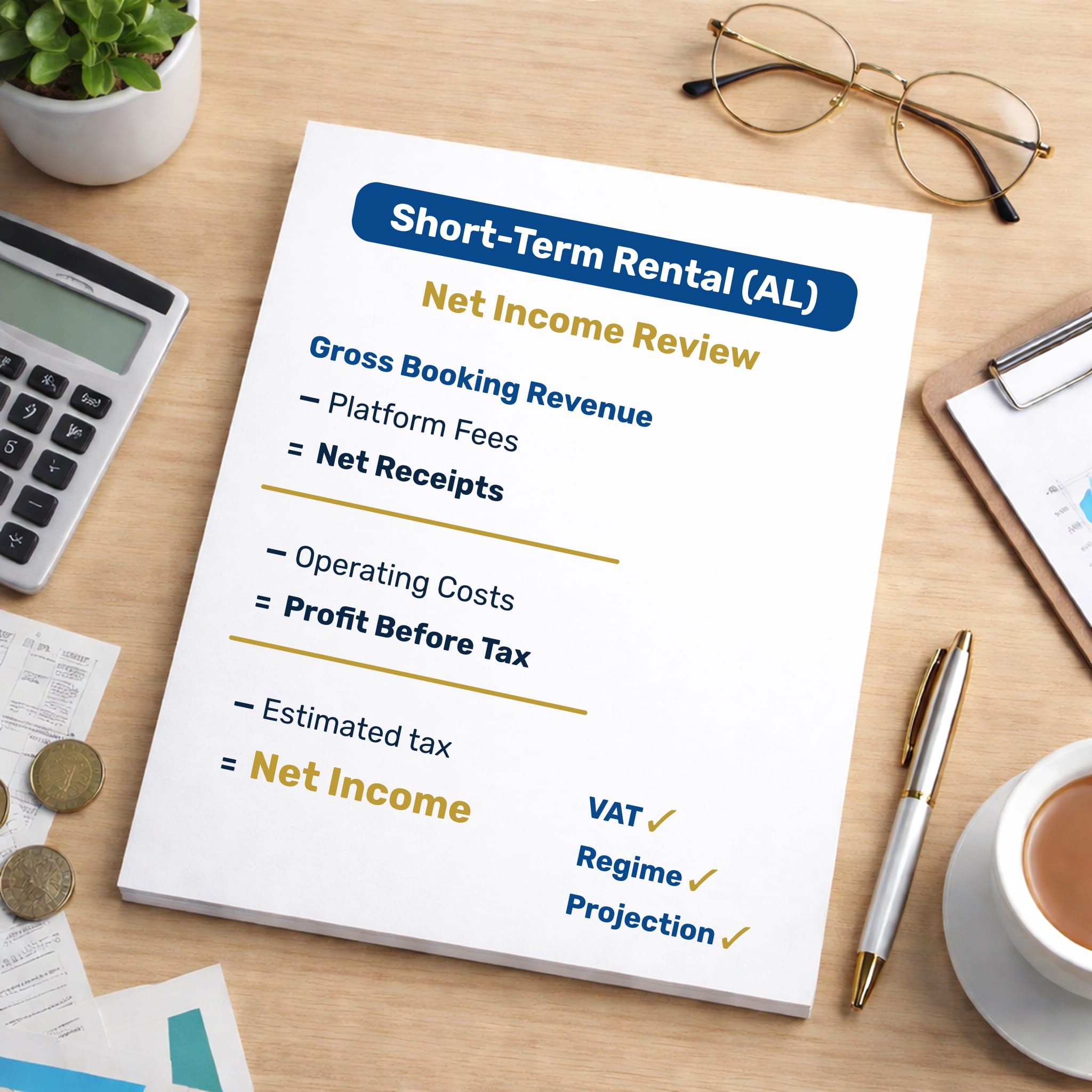
For short-term rental owners, better tax results usually do not come from doing more admin.
What actually improves net income is:
- choosing the right structure
- keeping the accounting position clear throughout the year
- dealing with tax issues early before they become expensive.
Owners must focus on whether their properties are performing well.
But also, whether too much income is being lost through poor setup, missed deductions, late decisions, or avoidable tax inefficiency.
The Wrong Mindset
Many short-term rental owners focus on questions like:
- “What do I need to file?”
- “Do I need an accountant?”
- “Which documents should I keep?”
Those questions matter, but they are not the ones that usually change net income.
The more useful question is:
What is reducing my net income — and what can be improved?
And this is where proper accounting starts to matter.
Net Income Is Not Just About Occupancy
Your net income is shaped by more than bookings. It is affected by things such as:
- how the activity is structured
- which tax treatment applies
- whether business costs are being properly considered
- whether reporting is being kept aligned during the year
- whether changes in revenue are triggering new obligations
Many operators treat short-term rental accounting as a year-end exercise.
But if the position is only reviewed after the year is over, the time to make the useful decisions that directly impact your net income may have already passed.
What Usually Makes the Biggest Difference
1) Understanding What Revenue Growth Changes
Many short-term rental owners start operating with a structure that is convenient — and in some cases efficient.
But the same setup that was once efficient as the activity grows. Additionally, there might also be changes in the activity’s tax position.
As the business grows, it becomes more important to review whether:
- the current setup is still efficient (freelancers vs corporation)
- the administrative burden is becoming too much to handle
- the tax treatment still makes sense (e.g. VAT treatment)
- the owner wants a clearer view of actual profitability
- financing, staffing, or reinvestment is becoming more relevant
Growth is positive. But growth without review often leads to a lot of inefficiencies.
2) Keeping Costs Properly Tracked
A surprising amount of money is lost simply because the costs are not kept in order.
In short-term rental activity, this usually means one of two things:
- relevant costs are not being captured properly
- costs exist, but they are not being considered to their fullest
If the numbers are unclear, the owner cannot tell whether the property is genuinely efficient or just generating revenue.
Additionally, adopting different structure or a different VAT treatment could mean that you keep more of your net income by more efficiently reporting your business expenses.
3) Reviewing the Position During the Year — Not After It
Short-term rental business activities (like any other business activity really) move throughout the year. Occupancy changes. Platform income varies. Costs are uneven.
If left unattended, issues can accumulate.
When the accounting position is reviewed regularly, there is time to:
- correct inefficiencies early
- identify missing records
- monitor whether the tax position is becoming heavier
- avoid year-end surprises
- make decisions while they still matter
A late review is usually more expensive than an early one.
Not necessarily because penalties arise — although they can — but because opportunities are missed.
4) Separating “Compliance” From “Efficiency”
Compliance means the required obligations are dealt with.
Efficiency means the activity is being run in a way that supports the owner’s business.
You can be compliant and inefficient.
That is an important distinction for short-term rental owners, because many only look at whether the filings are done. But a proper accounting treatment can help the business operate properly and owners to keep more of their revenue.
What Owners Often Get Wrong
A few patterns come up repeatedly:
Treating the accounting like a side issue
Even when the revenue is significant, the accounting side is often treated informally for too long.
Looking only at gross income
High booking income can create a false sense of performance if the tax and cost position is not reviewed properly.
Waiting until there is a problem
Many owners only seek advice once revenue has increased, something has been missed, or the tax outcome feels unexpectedly heavy.
Assuming the original structure is still fine
What was acceptable at the beginning may no longer be the best fit once the activity becomes more established.
Focusing on low accounting cost instead of total outcome
Trying to minimize accounting fees while ignoring tax inefficiency usually costs more overall (you end up paying more additional tax than the accounting fees).
A Practical Test
If you own a short-term rental property in Portugal, your accounting position probably needs review if any of the following are true:
- revenue has increased noticeably over the last 12 months
- you are planning larger future works on your properties
- the activity now feels more like a business rather than just a side-hustle
- there is more than one property involved
- you are unsure whether all relevant costs are being considered properly
- your net income feels lower than it should be despite strong bookings
- the current setup was chosen early and never reviewed again
A good accountant should be able to answer if your current setup is still working in your favour.
What Actually Improves Net Income
In most cases, the real improvements come from a small number of practical actions:
- reviewing whether the structure still makes sense
- keeping the cost position complete and usable
- monitoring the activity during the year
- dealing with tax questions before they become problems
- making decisions based on actual numbers of net outcome
This is usually where the value is:
Having the activity looked at properly, with the owner’s position in mind.
Final Thought
Net income improves when structure, tax classification, VAT position, cost treatment are reviewed deliberately and proactively.
Accounting of short-term rental activities should not be reduced to filing obligations and year-end reporting.
That is the difference between accounting that merely records the activity and accounting that supports it.